PANCARTE Hi All,

Let me introduce myself, my name is Horace. I’ll be present from time to time on this platform to give you tips, tricks, advice and procedures to put forward in your project to allow you to determine, in this jungle that is the roofing industry, the right assembly to choose according to your needs and this… in complete neutrality.

My presence and my name in your landscape come without a doubt from the derivative of the search engine O-RAS (Roof Assembly search for our English-speaking acolytes) and (Recherche d’Assemblages de Système …de toiture… chuut! For our French-speaking acolytes)

As you know, the world of roofing is constantly changing and one of the latest requirements of the Canadian Building Code 2015 edition setting the wind uplift standard based on constant research by the NRC and of the SIGDERS group (Special Interest Group on Dynamic Evaluation of Roofing Systems) bringing together a large majority of industry stakeholders, all working to achieve stability and a standard on roofing application methods according to satisfactory criteria for everyone.

In this sense, the web search engine for CSA A123.21, O-RAS test results is at your disposal! It is available at the site https://crt-csa.ca/recherche-avancee.php

Well, well, I hear you telling me that you are used to seeing the results via the manufacturer, or elsewhere, but here I am providing you with a summary as of today, which shows you that O-RAS is the only tool incorporating the largest number of test results in accordance with the CSA A123.21 standard. Table 1, constantly evolving, gives you a portrait of the advantages.
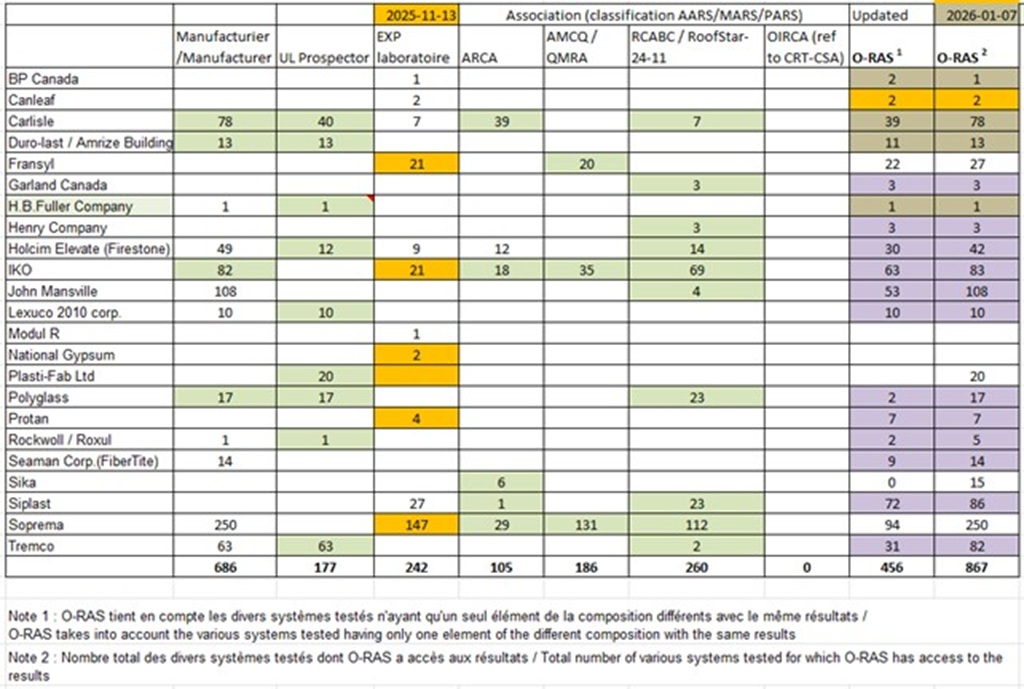
Tableau référence


“OIRCA refers directly to the reference plant site”

Some sites list the test results according to the results obtained in the laboratory before reducing the safety factor of 1.5, others report results according to FM-4470 tests or do not include the types of anchors and their resistances. In addition, some tests are performed on steel decks of different gauges (either 33 or 40 ksi), which gives a distorted reference, if we do not pay specific attention to it!

Follow me regularly at www.crt-csa.ca/blog, I will write articles on some of these particular points in order to allow you to stay on the road!

New easy way to find the right roofing system for your particular roof according to the specifications of the National Building Code of Canada 2015 and this, in complete neutrality!

Come and see often, some new systems will be updated gradually, if you are not sure how to use it or if you are looking for something special not listed here, join us on ; info@crt-csa.ca

See you for the next article on research methods!
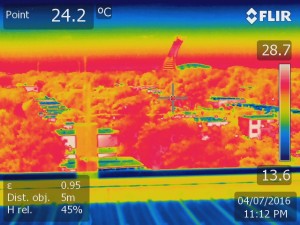
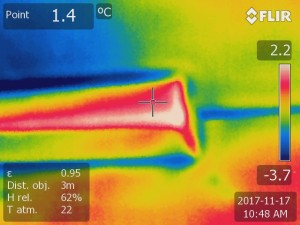
IR_0633_Ilot chaleur murs - toit

White roofs are one of the latest trends in energy efficiency. They are installed in residential, commercial, industrial, and institutional buildings, in both the United States and Canada. Over the past 15 years, white or reflective roofs have become very popular. They are even required by regulations in some northern cities, such as Montreal.

It is true that in some warmer climates, white roofs are a useful and effective option. However, their systematic use in cities north of the 45th parallel raises serious questions and, in my opinion, requires careful consideration of each project before perpetuating the trend of reflective roofs.

The Myth of White Roofs

Popular popularity, as well as many regulations that are not scientifically based, tell us that white roofs always save energy and reduce pollution. Unfortunately, this claim is a myth!

The purported advantages of reflective roofs, especially in colder climates, are based on flawed science and self-serving marketing that has led to the belief that white roofs are energy-efficient and more cost-effective than conventional roofs.

What is the reality?

In fact, white roof membranes have high reflectivity, which directs heat upwards, much like high-performance glass. Consequently, the presence of a vapor barrier on the warm side of an assembly, which is required by the Building Code, traps an abnormal rate of condensation beneath the white membrane, which itself has low water vapor permeance.

The result: extreme condensation problems, water infiltration, degradation of ventilated wood decking, and much more! And who will be held responsible for these problems? Given that the contractor installs white membranes out of obligation in areas designated by the municipal authority and current regulations, without being able to consider the building’s construction type and its surroundings, can they be held responsible for the resulting problems?

Reducing the urban heat island effect: two-way consequences

In the urgent need to reduce the “urban heat island effect” by a few degrees in summer, white roofs have been presented as a life-saving solution to combat climate change. In northern countries like Canada, this notion remains true for only a few weeks a year, six weeks at most!

This same phenomenon is significantly reversed in winter, when the accumulated snow on the surface acts as additional insulation. Not to mention the accumulated dirt, which considerably reduces the reflectivity, starting as early as the second year after installation.

What the Studies Say

All the studies conducted, including the one from Lawrence Berkeley National Laboratory, demonstrate the effectiveness of using white reflective roofing everywhere, including in northern climates. However, these studies do not take into account thermal performance, air infiltration, or vapor entrainment. They are limited to measuring the surface temperature at the roof level.

Newer studies, including one from Virginia Tech, call into question the energy savings of white reflective membranes and challenge the assumption on which standards and codes were based. They demonstrate that the reflectivity of windows, masonry walls, ventilated roofs, and many other factors contributes more to the increase in ambient temperature and can even negate or cause problems such as condensation.

https://news.vt.edu/articles/2017/10/CAUS-Black-White-Roofing.html

Architects, engineers, building owners, and roofing system designers also question their scientific validity. In a PDF document available on their website, RCI acknowledges that for colder climates, installing a reflective roof is not always the ideal option.

https://iibec.org/wp-content/uploads/PS-2018-17-Cool-Roofing.pdf
IR_2844
Thermal image showing condensation contamination of a wood roof deck after only two years of installation.

My expertise, my question

Working as a building envelope waterproofing consultant specializing in infrared thermography and having no affiliation with any membrane manufacturer, I believe I have an impartial perspective and expertise supported by some very unfortunate realities.

Considering the various problems associated with white roofs in northern climates, a question arises: must we wait for major roof collapses before reconsidering the systematic installation of white roofs on buildings?

______________________

Source:

  • Article published in the Baltimore Sun on October 28, 2013, written by Mr. Samir Ibrahim, Director of Design Services and Project Reviews for Carlisle SynTec Systems
  • Cool vs. Non-Reflective Roofing, RCI. (http://rci-online.org/wp-content/uploads/PS-2018-17-Cool-Roofing.pdf)

Michel Desgranges, T.Sc.A.
#OTPQ : 18788

Now that the standard has become bi-law in some Canadian provinces, and that many different interpretations are conveyed for the purpose of commercialization of waterproofing systems.
It is essential to be able to obtain, quickly and accurately, an assembly meeting the specific requirements of each roofing projects with neutrality and integrity.

CSA A123.21-14 STANDARD IN NATIONAL BUILDING CODE OF CANADA

Adapted normative advisory service

With over 30 years experience in the building envelope weathertighness with a specialization of over 20 years in roofing waterproofing, it’s possible to address your special normative requests and information.

Having participated for several years in the development, improvement and integration of CSA A123.21 standards in the National Building Code of Canada 2015 with the SIGDERS grouping created by NRC, voting member associations; ASTM International (D-08 Committee, C-24 and E06), CSA Group committee Roofing and waterproofing, RCI envelope weatertighness Technical Committee.

Whether you are architects, specifiers, contractors, manufacturers, managers,etc. you will get the most appropriate information services to your project.

ONE PLACE TO FIND IT ALL

Résultat CSA-A123.21Stop searching all over the web or in manufacturing, all will be at the same place, send requests with our contact form